Smarter Workspaces with Modular Aluminum Extrusion
November 7, 2025
Solving Tough Industrial Scanning Jobs with Zebra’s FS80 Fixed Scanner
November 19, 2025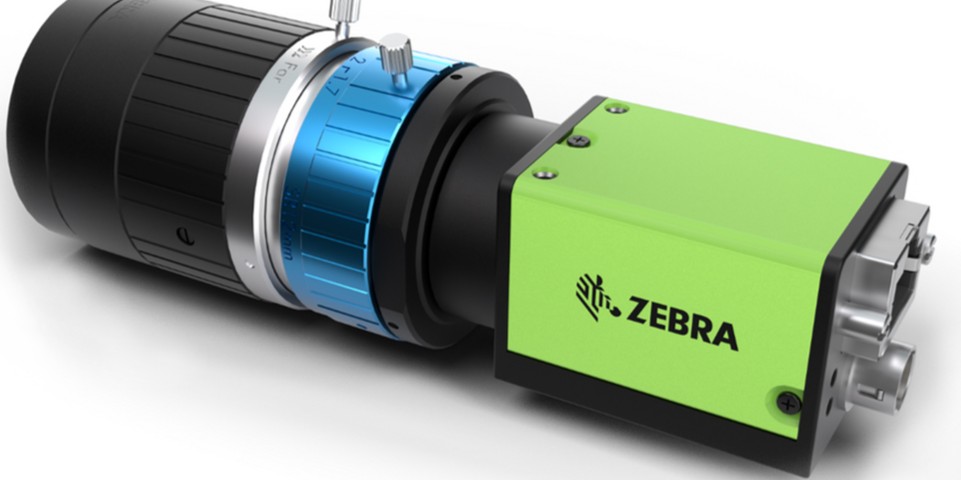
In the past, deploying vision-guided robotics (VGR) was a complex, resource-intensive endeavor, and it was typically reserved for large manufacturers or companies with highly experienced robotics or machine vision experts.
But today, VGR is now accessible to companies of all sizes, even those without in-house expertise. This is thanks to new machine vision software innovations from hardware and software providers such as Zebra Technologies.
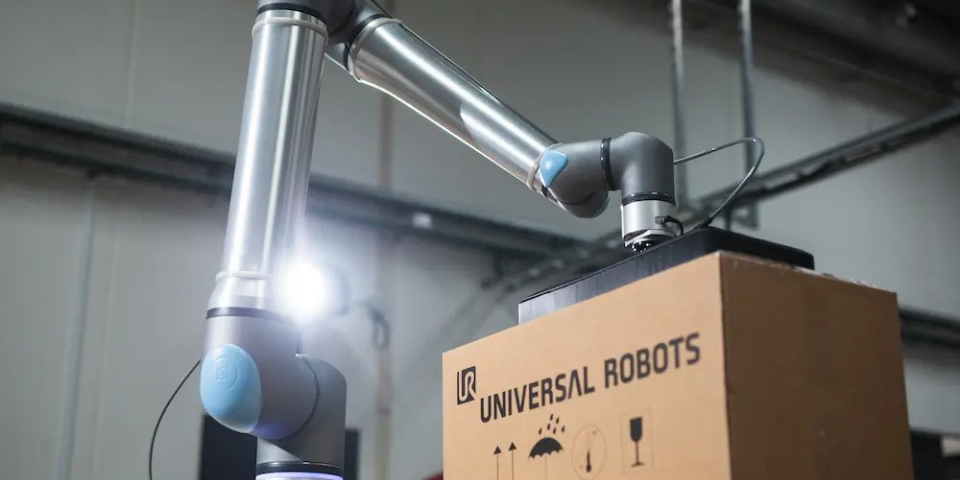
Now, with simple and easy-to-use solutions such as Zebra’s Aurora 2D VGR Assistant, you can quickly and easily configure and deploy vision-guided collaborative robots (cobots) to automate many different tasks, including:
- Loading and unloading parts or products.
- Tending CNC and injection molding machines.
- Picking, packing and inspecting labels and packaging.
- Drilling, screwing, fastening and applying adhesives.
- Performing 2D visual inspections.
- Performing metrology via 2D measurement.
- Scanning barcodes and capturing text via OCR.
Let’s take a quick look at the opportunity to add 2D vision guidance to cobots, the challenges presented by adopting this technology, and how solutions like the Aurora 2D VGR Assistant have now simplified the entire process for companies of all sizes, regardless of machine vision expertise or experience.
The Opportunity and Challenge of Deploying Vision-Guided Robots
Many manufacturers have already embraced cobots for simple and repetitive work, saving time and labor and freeing up personnel to focus on other value-added tasks. But giving robots the “eyes” to understand product position, orientation or the operating environment for performing these tasks adds another layer of complexity, especially for teams without dedicated or experienced vision experts.
Some of the most common barriers to VGR adoption include:
- Lack of machine vision or VGR experience among plant-floor teams.
- Nonstandard communication protocols between robots and vision systems.
- Limited calibration tools for aligning robot and camera coordinate systems.
- Difficulty in configuring and validating robot vision tasks.
- Frequent product changeovers that require rapid reconfiguration of vision logic.
For manufacturers running high-mix, low-volume lines, these challenges are compounded by the need to change setups frequently without disrupting throughput or quality.
How Zebra Has Made VGR Accessible and Relatively Easy
Zebra’s Aurora 2D VGR Assistant is a software add-on to Zebra’s Aurora Design Assistant—a flowchart-based IDE for building vision applications. It was purpose-built to help manufacturers quickly deploy 2D vision-guided robot systems without deep technical experience.
It greatly speeds up and simplifies 2D VGR configuration and deployment with several key tools and capabilities:
- A straightforward, browser-based interface.
- Guided workflows for calibration and configuration.
- No need for extensive coding or programming.
- Support for common cobot platforms.
- 2D vision guidance, inspection, metrology, scanning and OCR in a single platform.
Using the Aurora VGR Assistant, teams can:
- Set up robot-to-vision communication via TCP/IP messaging.
- Connect and configure GigE Vision cameras in minutes.
- Calibrate robots and cameras using intuitive tools and metrics.
- Teach and test object pick-points within a guided web interface.
- Save time and effort with standard templates for common requirements.
What sets this solution apart is how it abstracts complexity and focuses on usability. From plug-and-play setup tools to ready-made templates, Zebra’s approach allows operators to set up 2D VGR tasks ten times faster than using low-level machine vision blocks.
The system is compatible with Universal Robots and other leading cobot platforms, and it’s optimized for use with Zebra’s CV60 GigE Vision cameras and 4Sight EV7 industrial controller.
Key Capabilities and Workflow
The Aurora VGR Assistant simplifies the four most critical stages of 2D VGR deployment:
- Communication Setup: Establishes communication between the robot and vision system using TCP/IP protocols.
- Camera Setup: Connects and configures cameras using Zebra’s Imaging Capture Works interface, which supports GenICam-compliant devices.
- Calibration: Uses a robust calibration grid to align robot and camera coordinate systems. Users can switch between manual and automatic calibration and validate accuracy with built-in metrics.
- Teaching and Testing: Teaches objects of interest and tests the entire VGR workflow directly from the web interface. There’s no need to program the robot to validate guidance performance.
These tools allow manufacturers to perform barcode reading, OCR, metrology, defect detection and guidance tasks in one platform—all without switching between multiple environments or writing custom code.
Common Applications of 2D VGR
Ultimately, Zebra’s Aurora VGR Assistant enables 2D VGR applications across a range of industries and use cases, including:
- Machine Tending: Cobots load and unload CNC machines or molding systems, handling parts with variable positioning on trays or conveyors.
- Packaging and Kitting: Robots pick objects arranged in a single layer and place them into boxes or kits while scanning barcodes and checking labels.
- Tool Guidance: Cobot arms perform guided assembly tasks like screwing, fastening or applying adhesive with consistent accuracy and integrated visual inspection.
These 2D vision applications are especially powerful in settings where part types are known and objects are presented in structured layouts. If you have more complex requirements that demand 3D capabilities, you can opt for Zebra’s 3D vision solutions instead. These all offer faster, simpler, and easier setup through Zebra’s Aurora Design Assistant IDE software and relatively easy-to-configure 3D vision sensors.
Making Vision-Guided Robotics More Attainable
As labor costs rise, quality standards increase, and automation becomes essential to remain competitive, the case for VGR is stronger than ever. The ability to give cobots “eyes” is no longer a nice-to-have. It’s becoming a strategic necessity to avoid falling behind and stay ahead of the curve.
Fortunately, solutions such as Zebra’s Aurora 2D VGR Assistant provide a simple and scalable way to add 2D VGR to your cobots and give them powerful and sophisticated capabilities that allow them to sense, adapt to, and manage objects, tasks, and their environment.
As developers and providers of machine vision, robotic and automation solutions, our experts are already using Zebra’s Aurora VGR Assistant for some of our own customer projects. To learn more about this solution and get help with adding 2D VGR to your robots, connect with us now. We’d be glad to set up a personalized walkthrough, answer your questions, and provide more fact sheets, application briefs and other information on the Aurora 2D VGR Assistant.