Case Study: Palletizing in the Warehouse and Logistics Industry
March 24, 2026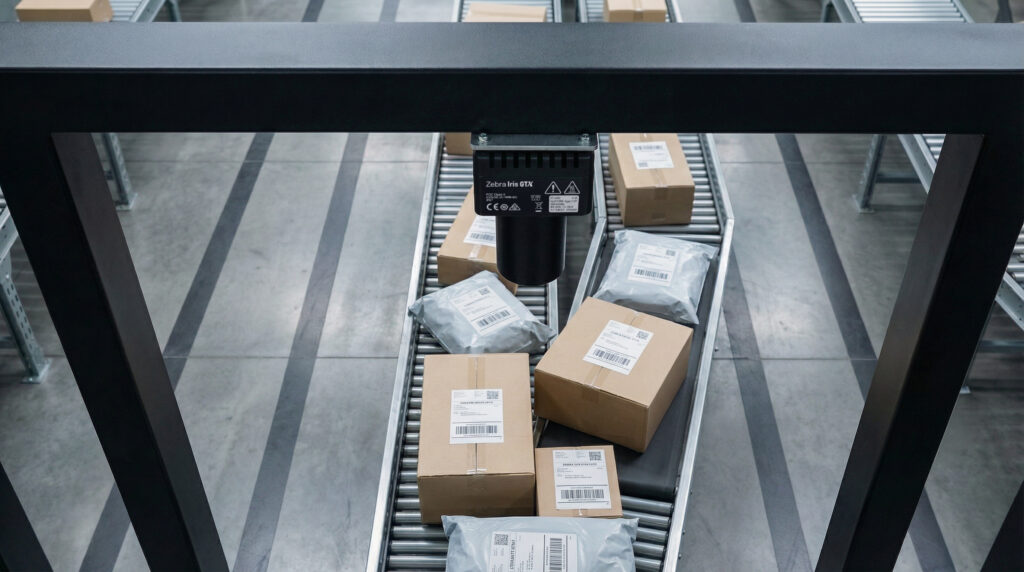
In high-speed fulfillment and distribution operations, keeping packages moving continuously is essential. Even a short conveyor or sorter disruption can create problems that spread well beyond the immediate jam, including recirculating packages, repeat processing, delayed shipments, lost productivity, and greater difficulty meeting service-level agreements.
But one of the biggest challenges is determining whether a detected blockage is actually a jam.
Traditional photoelectric sensors, or “photo eyes,” generally provide a simple blocked-or-not-blocked signal. That works in basic applications, but modern fulfillment environments are far more complex.
Dense package flow, irregular shapes, reflective surfaces, polybags, lightweight parcels, temporary slowdowns, and other common conditions can trigger false positives, resulting in jam alerts, conveyor stoppages, and wasted labor.
Fortunately, Zebra AI-powered machine vision provides a far more intelligent way to monitor conveyor activity, adding more visual context that lets its smart cameras and software distinguish true jams from false ones. This will keep your material flowing as quickly and efficiently as possible.
Why Traditional Jam Detection Can Fall Short
Most traditional jam-detection systems monitor one specific point along a conveyor. If an object blocks a beam for a certain amount of time, the system might interpret that condition as a jam. The blocked sensor doesn’t recognize or tell you what’s actually happening across the broader conveyor area.
So, a temporary concentration of packages might trigger an alert, even though the packages are still moving.
Dense flows can look like blockages to these sensors, even when the line is functioning normally. Reflective packaging can also create inconsistent readings, and lightweight or irregularly shaped parcels might move unpredictably, triggering more false alarms and unnecessary stoppages.
Ideally, modern fulfillment now demands a smarter, more sophisticated way to discern true jams from false ones, so you can avoid:
- Unnecessary conveyor or sorter shutdowns.
- Workers being diverted to investigate non-issues.
- Package recirculation and repeat processing.
- Reduced throughput and capacity.
- Alert fatigue and slower response to real problems.
- Greater difficulty maintaining service-level agreements.
These issues are especially costly in facilities where every minute of conveyor uptime contributes directly to output and on-time delivery.
Giving Jam Detection a Wider, Smarter View with AI
Zebra has developed a much better approach to jam detection by combining its Iris GTX smart cameras with its AI-powered Aurora Vision software.
Instead of looking at one point, Zebra’s smart cameras monitor broader conveyor areas with a wider field of view. The software then analyzes multiple aspects of package movement and flow in real time, including:
- Package velocity and movement.
- Congestion and package density.
- Flow patterns over time.
- Object behavior.
- Pileups and skewed products.
- Slowing flow and partial jam conditions.
This added visual context allows the system to determine whether packages have truly encountered a true mechanical jam or whether a temporary blockage is likely to clear on its own.
In other words, traditional sensors can tell you that something is blocking a point. Zebra’s AI-enhanced machine vision can help tell you what’s actually happening on the conveyor. When the system recognizes a false jam, conveyor operations continue uninterrupted, and personnel can remain on task.
Faster Response When a True Jam Occurs
Of course, true mechanical jams still require immediate action. The advantage of AI-powered machine vision is that it can identify these events more accurately while reducing the false alerts that waste time and labor.
When Zebra machine vision identifies a true jam, the system can:
- Stop the affected conveyor automatically.
- Send precise and timely alerts to operators.
- Provide real-time visual info about the issue.
- Identify the location of the problem.
- Give personnel a clearer situational understanding before they respond.
This helps your maintenance and operations teams focus on actual problems rather than repeatedly investigating temporary slowdowns or other self-resolving conditions.
The result is a more predictable workflow with fewer unnecessary disruptions. In fact, in real-world applications, we’ve seen this innovation increase conveyor and fulfillment throughput by a whopping 30%.
It also helps reduce alert fatigue, maintain consistent material flow, and allows you to support better service-level agreements with timelier, more uninterrupted fulfillment.
This technology can be applied across high-speed conveyor lines, outbound sorter lanes, merge points, multiple conveyor lanes, dense package flows, irregular package shapes, reflective materials, polybags, lightweight parcels, and other complex or partial jam conditions.
Simplifying Jam Detection with More Powerful, Easier-to-Use Solutions
Conventional photoelectric solutions can require multiple photo eyes, careful sensor alignment, timing logic, and PLC programming to monitor complex conveyor environments.
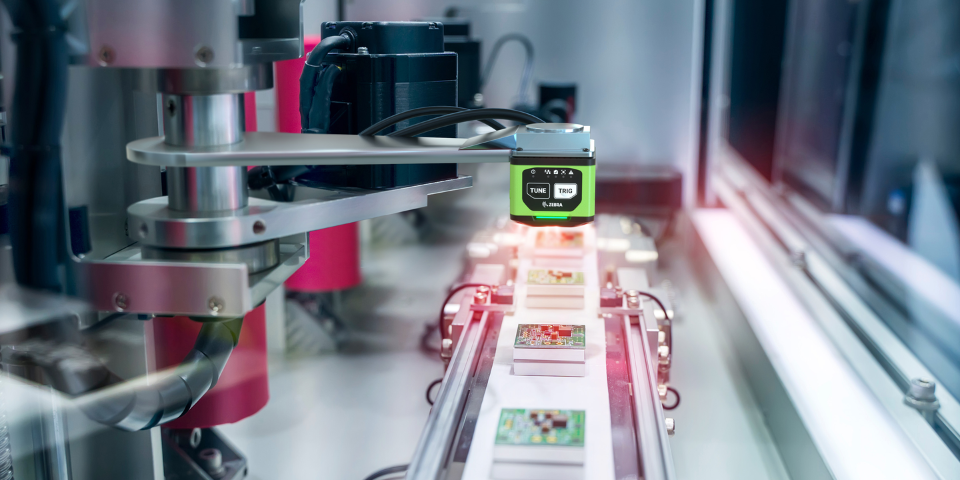
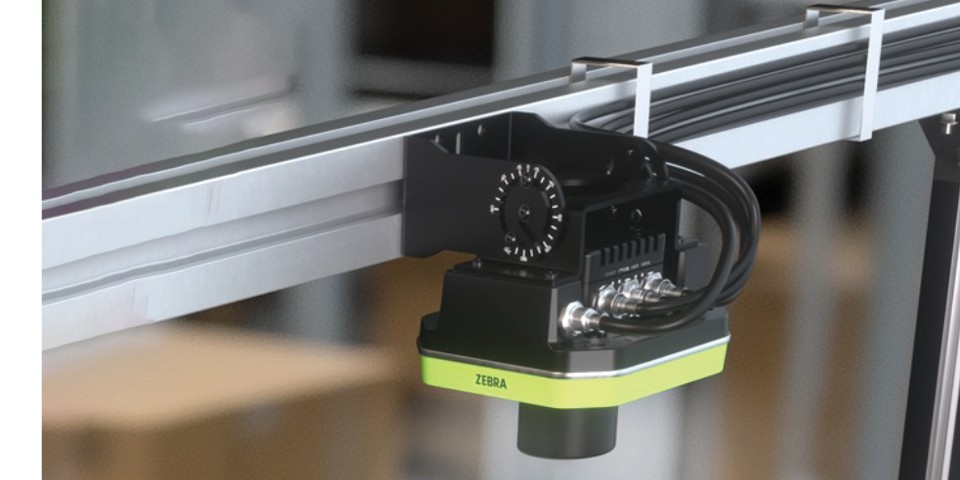
But Zebra offers a more software-driven approach. The Zebra Iris GTX Smart Camera provides high-resolution image capture, embedded dual-core processing, connectivity, and a rugged platform for continuously monitoring package flow and conveyor conditions.
Zebra Aurora Vision software provides the AI-powered analysis behind the application. Its flowchart-based development environment supports jam detection, visual diagnostics, configuration, and scalable machine vision applications.
Together, these technologies provide an intelligent platform that can be deployed across conveyor and sorter operations while also creating a foundation for additional machine vision and automation initiatives.
Get Started with Keeping Your Fulfillment Operation Moving
Motion Automation Intelligence can help you explore and implement improved AI-powered jam detection for better conveyor visibility, reduced false alarms, optimized labor, and increased throughput across your fulfillment operations.
To learn more, connect with Motion Automation Intelligence to discuss your conveyor applications, review Zebra’s technology, and get professional recommendations and services to keep your material moving.